
Fake News put human life at risk: the controversy of the yellow fever vaccination campaign in Brazil
DOI:
https://doi.org/10.29397/reciis.v14i1.1979Keywords:
Fake news, Health, Communication, Biopolitics, Yellow fever, Vaccination.Abstract
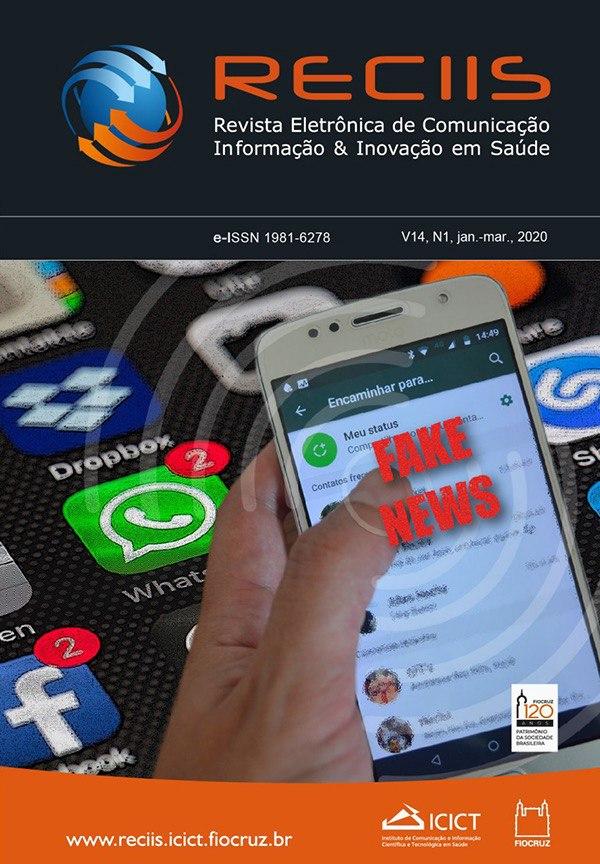
This article analyses the fake news that spread contents of public health using digital networks and crossplatform messaging applications. To list the arguments used by those people whom spread fake news to dispute the utterance of the truth, in the discourse fild, the authors have chosen the yellow fever vaccination campaign, launched in the outbreak of the disease in Brazil, in late 2016. We selected the texts of posts and audios that multiplied via WhatsApp, specifially in 2018, for analysis based on the theses on the production of truth and power by Michel Foucault and Nikolas Rose. Thus, we started a reflction on the action of fake news in defense of life while themselves put many lives at risk. The World Health Organization already points out fake news as one of the factors responsible for the drop in international levels of immunization.Downloads
Download data is not yet available.
Downloads
Published
2020-03-31
Issue
Section
Fake news and health dossier
License
Author’s rights: The author retains unrestricted rights over his work.
Rights to reuse: Reciis adopts the Creative Commons License, CC BY-NC non-commercial attribution according to the Policy on Open Access to Knowledge by Oswaldo Cruz Foundation. With this license, access, download, copy, print, share, reuse, and distribution of articles is allowed, provided that it is for non-commercial use and with source citation, granting proper authorship credits and reference to Reciis. In such cases, no permission is required from the authors or editors.
Rights of authors’s deposit / self-archiving: The authors are encouraged to deposit the published version, along with the link of their article in Reciis, in institutional repositories.
How to Cite
Fake News put human life at risk: the controversy of the yellow fever vaccination campaign in Brazil. (2020). RECIIS, 14(1). https://doi.org/10.29397/reciis.v14i1.1979